The Last Middle Class
Sector 9 Field Report — Economic Elimination Archive
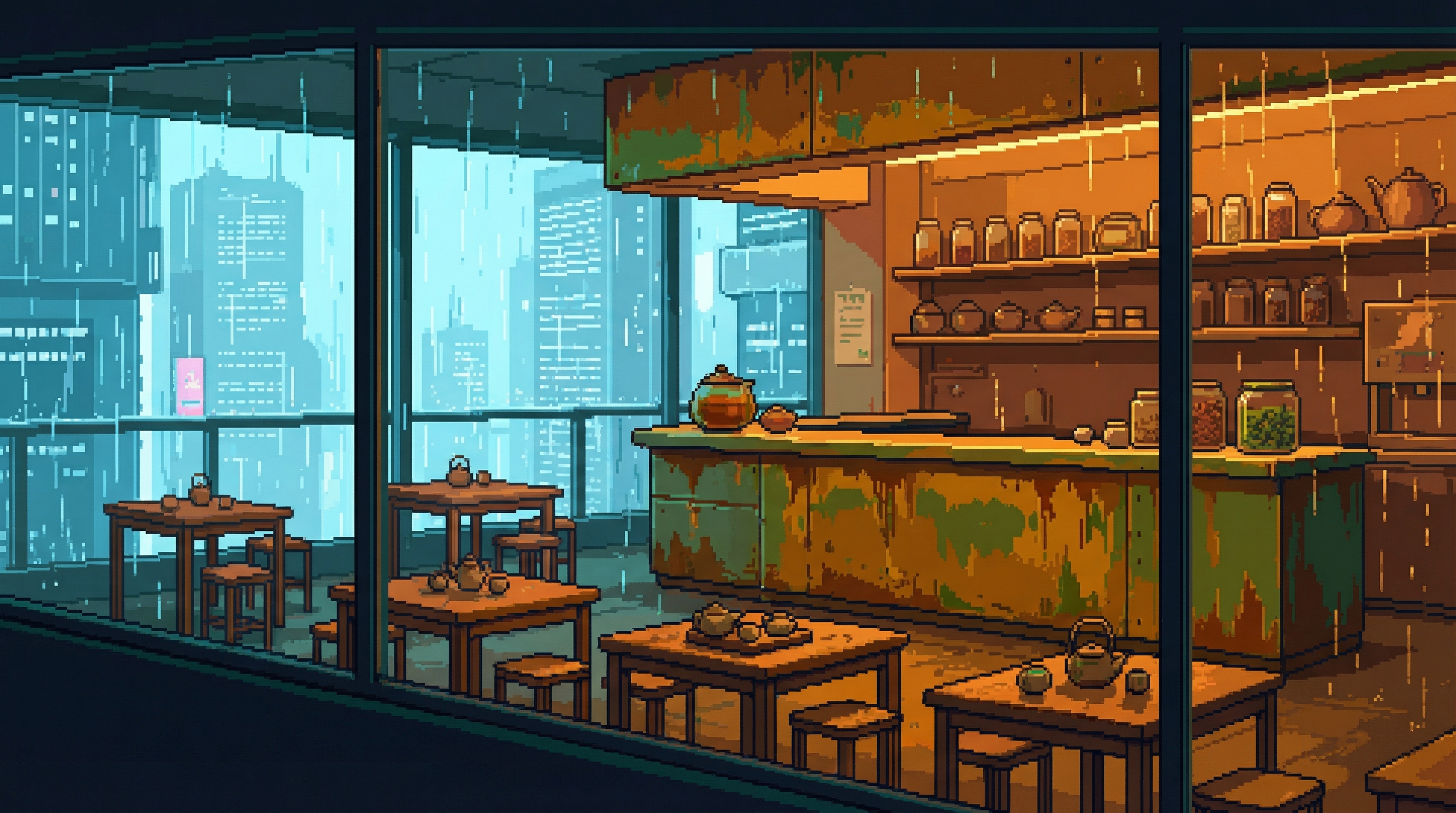
The Shop
Tomiko Sato owned a tea shop.
This was in 2174, in the three-block commercial strip between Sector 9's residential tier and the Ironclad manufacturing perimeter. The shop had six tables, a counter built from salvaged steel, and a menu of eight teas — four synthetic, four real. The real teas cost three times as much. The shop was profitable. Not prosperous. Profitable.
Tomiko was part of the last cohort of independent business owners in the Sprawl — people who maintained livelihoods outside corporate employment through skill, reputation, and the specific stubbornness of entrepreneurs who refused to believe that independence was dying.
The tea shop had six tables and smelled of real tea — a luxury in the Sprawl, where most beverages are synthetic. The counter was salvaged steel, warm from the heating element built into its surface, stained by years of spilled tea in amber and green.
What Killed the Shop
Not competition. Infrastructure.
In 2176, Nexus announced that consciousness licensing for independent operators would no longer be available at corporate-negotiated group rates. Independent Professional-tier licensing jumped from ¢7,200 to ¢18,000.
Tomiko's annual profit was ¢14,000.
The math stopped working.
The distinction between personal failure and systemic elimination is the Great Divergence's cruelest feature. Tomiko didn't fail. Her arithmetic did.
She chose the corporate job. Not because she wanted to. Because the system had made every other option more expensive than compliance.
The Transition
Tomiko works in Nexus's hospitality division now. She manages the tea service for the Lattice's executive dining floor. The tea is better than anything she served in her shop. She doesn't enjoy it. She doesn't dislike it. She performs her function with the specific competence of someone who once ran her own business and now runs someone else's tea service.
The Nexus executive dining floor smells of nothing — atmospheric processing strips scent to prevent distraction. The tea is brewed by AI to molecular precision. It is objectively superior. It is also, in a way that Tomiko can identify but not articulate, less.
The Artifact
Her shop's counter — salvaged steel, built by hand — sits in a Dregs scrap market. Someone will buy it for the metal content. The tea stains are still visible.
Amber and green, the marks of years of real tea on warm steel. The person who buys it will never know what it was. They will know what it weighs.
What the Numbers Don't Show
In 2174, approximately 340,000 independent operators existed across the Sprawl. By 2176, the licensing decoupling had reduced that number by 94%. The remaining 6% survived through one of three methods: corporate subsidy (independence in name only), gray-market licensing (illegal), or operating without a consciousness license (also illegal, and cognitively debilitating).
The Phase Transition is the systemic event. This is how it felt to one person.
The Corporate Compact absorbed her — the Compact's cage is warm and the tea is excellent.
Unanswered Questions
- Was the licensing decoupling a deliberate strategy to eliminate independent business, or a side effect of corporate negotiations that nobody modeled for impact on small operators?
- Her counter sits in a scrap market priced per kilo. Has anyone recognized it? Does anyone remember the shop it came from?
- Tomiko says the Nexus tea is objectively better but somehow less. What exactly is missing from a perfect cup of tea?